

 When temperatures drop, few things matter more than knowing your home will stay warm and comfortable. At Westmore Fuel, our delivery drivers work hard throughout the heating season to keep customers supplied with premium B20 Bioheat Plus® fuel. But avoiding a heating oil runout is a team effort.
A little preparation on your part can make deliveries smoother, help us serve you more efficiently, and reduce the chances of unexpectedly running low on heating oil during the coldest days of winter.
Here are some important ways to stay ahead of heating oil runouts this season.
Many homeowners enjoy the convenience of our free automatic delivery service, but some customers prefer to check their own tank and call when they need fuel. If you choose our will-call delivery service, timing is everything.
While we always do our best to respond quickly, especially during emergencies, it’s important to give us several days’ notice whenever possible. Advance notice allows us to efficiently schedule your home into a delivery route.
It’s also smart to plan even farther ahead during stretches of extremely cold weather or before major winter storms. Cold temperatures can cause your heating system to consume fuel faster than usual, and severe weather can affect delivery schedules across the region. This presented us with major challenges over this past winter.
One of the most common reasons homeowners experience runouts is waiting too long to place an order. As a general rule, contact us when your tank reaches the one-quarter mark. That gives you a comfortable cushion before your tank gets critically low.
Your oil tank gauge gives you a quick snapshot of how much fuel is still in your tank, but it only helps if you know what you’re looking at.
Most tank gauges are found on top of the tank inside a clear plastic or glass casing. The markings are similar to a car’s fuel gauge and typically display F, ¾, ½, and ¼. A floating red indicator shows the current fuel level.
If the float drops all the way to the bottom or disappears entirely, your tank may be nearly empty.
It’s also important to make sure the gauge itself is functioning properly. You can carefully remove the outer cover and gently press the float downward. If it rises back to its original position, the gauge is usually working correctly. If it sticks or does not move properly, contact Westmore Fuel so we can help address the issue.
Guessing how much oil is left in your tank is never a good strategy during winter!
There’s a reason most Westmore Fuel customers choose automatic delivery service. It removes the stress and guesswork of watching your tank during the heating season.
With automatic delivery, we use advanced tracking methods and weather data to estimate how much fuel your home is likely to use. Based on those calculations, we schedule deliveries before your tank runs too low, typically around the quarter-tank level.
Automatic delivery can be especially valuable during long cold spells when fuel usage increases rapidly. Instead of constantly checking your gauge or worrying about whether you remembered to schedule a delivery, you can focus on everything else that comes with managing a busy household.
Even the best delivery schedules occasionally need adjustments. Changes in your household or lifestyle can significantly affect how much heating oil your home uses.
For example, your fuel consumption may increase if:
Fuel usage can also decrease if you regularly use a supplemental heating source, such as a pellet stove or fireplace, during milder weather.
Keeping us informed about these changes helps us fine-tune your automatic delivery schedule and better predict your heating needs.
Westmore Fuel proudly delivers premium B20 Bioheat Plus® fuel to homeowners throughout New York and Connecticut. This cleaner-burning fuel combines 20% biodiesel with 80% ultra-low sulfur heating oil to provide efficient, environmentally responsible home heating.
Bioheat Plus fuel burns cleaner than traditional heating oil and can help reduce emissions while supporting reliable heating system performance. Best of all, homeowners can start using it without making modifications to their existing heating equipment.
New York residential customers may also qualify for a 20-cent-per-gallon state tax credit on eligible Bioheat Plus fuel purchases through December 31, 2028. For households that use 1,000 gallons annually, that can add up to approximately $200 in savings.
Since 1938, Westmore Fuel has proudly helped families stay warm and comfortable throughout the heating season. With smart planning, dependable delivery service, and premium Bioheat Plus fuel, avoiding a heating oil runout can be simple and stress-free.
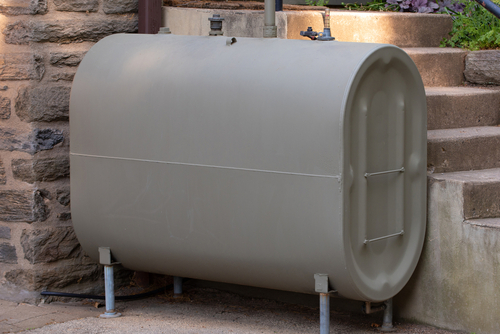
 Heating oil tanks are built to last, but they don’t last forever. With proper care, many oil tanks can give you comfort for decades. Still, factors like humidity, tank construction, and maintenance habits all play a role in how long yours will hold up.
If your oil tank is approaching or past the 30-year mark, it’s wise to start thinking about replacement options before problems arise. A proactive approach can help you avoid costly damage and unexpected disruptions to your home comfort.
One of the biggest challenges with oil tanks is that deterioration often happens from the inside out. That means a tank can appear perfectly fine until a problem suddenly develops.
Professional inspections are the best way to catch hidden issues early. At the same time, a simple visual check on your part every now and then can help you spot warning signs before they become serious. Look for:
If you notice any of these issues, it’s important to act soon. Even a minor problem can escalate into a larger, more expensive situation.
Age is only part of the story. One of the leading causes of tank failure is internal condensation.
During the warm months, when your tank is not being used as often, empty space inside the tank allows moisture to form along the interior walls. Over time, this moisture mixes with sediment and creates conditions that lead to corrosion.
There’s a simple way to reduce this risk. Keeping your oil tank relatively full during the spring and summer helps limit the amount of air inside, which in turn reduces condensation buildup.
When it’s time for a replacement, working with an experienced team makes all the difference. Westmore Fuel has been installing heating oil tanks for homes and businesses throughout Westchester County, NY, and Fairfield County, CT for decades.
Our team manages every step of the process with care and efficiency. We remove your existing tank, whether it’s aboveground or underground, and install a new one in the same location or a more suitable spot on your property. Once the work is complete, we make sure the area is clean and restored.
For underground tanks, we use specialized equipment and coordinate with you ahead of time to ensure safe and easy access to the work area. After installation, we restore the landscape to ensure your property looks as good as it did before we started our work.
Today’s oil tanks are designed with safety and durability in mind. Compared to older models, they offer significant improvements that give homeowners greater peace of mind.
Many modern tanks feature:
Choosing the right tank depends on several factors, including your fuel usage, available installation space, and local regulations. A knowledgeable installer like Westmore Fuel can help guide you through the decision so you get the best fit for your home.
A new oil tank is just one part of keeping your home comfortable and protected. With Westmore Fuel, you also gain access to reliable fuel deliveries of our Bioheat Plus® fuel, along with service plans that include 24/7 emergency support.
We’ve been serving communities across New York and Connecticut since 1938, building lasting relationships with customers who value dependable service and local expertise. Our team lives and works in the same communities we serve, and we understand the importance of prompt, professional care.
Whether you need a tank replacement, a heating oil delivery, or a heating equipment repair, we’re here to help you stay comfortable all year long.
 A dependable supply of hot water keeps your home running smoothly. From morning showers to laundry and dishes, you rely on your water heater every day. So how long can you expect it to last?
For most traditional storage tank water heaters, the average lifespan ranges from 7 to 13 years. Where your system falls in that range depends on several factors, including:
If you have hard water with high mineral content, your water heater works harder than it should. Over time, minerals settle at the bottom of the tank and form sediment. That buildup reduces efficiency, strains components, and can shorten the system’s lifespan.
Getting a periodic professional tank flush every few years helps remove sediment before it causes damage. This simple service improves efficiency, extends equipment life, and helps support steady water temperatures. During that visit, a technician can also inspect one of the most important components inside your tank: the anode rod.
Inside most tank-style water heaters is a long metal rod, typically made of magnesium or aluminum. Its job is to prevent the steel tank from rusting. It does this through a process called electrolysis. The rod attracts corrosive elements in the water that would otherwise attack the tank lining.
Over time, the anode rod sacrifices itself and slowly deteriorates. That is exactly what it is designed to do. Once it is depleted, corrosion can begin attacking the tank itself. Without a functioning anode rod, a water heater could rust out in just a few years.
In most homes, an anode rod lasts between three and five years. Replacing it when needed is far less expensive than replacing the entire water heater.
It is worth noting, however, that not all tanks require an anode rod. Stainless steel water heaters, for example, are resistant to corrosion and typically do not use an anode rod.
After heating and cooling, water heating is the largest energy expense in most homes. It accounts for roughly 20% of your energy bill. The average household uses about 65 gallons of hot water each day for bathing, cooking, cleaning, and laundry.
If you are using an older electric water heater, you may be paying more than necessary. Oil-fired water heaters are known for their efficiency and fast recovery rates. Compared to electric models, they heat water more quickly and often at a lower operating cost.
Because electricity is typically generated at centralized power plants, it can result in higher overall carbon emissions than heating oil used directly in the home. Upgrading to a modern oil-fired system can mean lower utility bills, faster hot water recovery, and a reduced environmental impact.
If you are considering a replacement system, there are two primary types of oil-powered water heaters we install for our customers.
With proper maintenance, an indirect-fired water heater can last 15 to 20 years. The absence of a direct flame reduces stress on the tank, contributing to its long lifespan and durability.
Even with proper maintenance, no water heater lasts forever. Signs that it may be time to consider replacement include:
Westmore Fuel is your best choice for hot water heater installation. We have decades of experience in evaluating our customers’ hot water needs. We will be happy to review your usage and provide a free estimate for the cost of a new hot water heater, along with the expected savings you will experience with your new unit.

Home heating conversations often focus on electric heat pumps as the future of clean energy. While these systems may work well in milder parts of the country, the reality is different in the Northeast.
New York and Connecticut experience long winters, frequent cold snaps, and extended periods of below-freezing temperatures. In those conditions, electric heat pumps can struggle to keep homes warm, especially during extreme cold when demand is highest.
There is another important point that often gets overlooked. Despite popular belief, electricity today is not entirely clean. In New York and Connecticut, less than 10% of electricity currently comes from wind and solar power. Much of the remaining supply is generated from natural gas, particularly during peak winter demand. That means electrification alone does not automatically deliver lower emissions or reliable comfort for homeowners in our area.
A smarter approach is to embrace solutions that reduce carbon emissions while working with the infrastructure already in place. That is where our B20 Bioheat Plus® fuel plays a critical role.
Bioheat® fuel is a cleaner-burning, renewable alternative to traditional heating oil. It is made by blending ultra-low sulfur heating oil with biodiesel derived from renewable resources such as recycled cooking oils, agricultural byproducts, and plant-based oils. The result is a fuel that dramatically lowers carbon emissions without sacrificing performance or affordability.
Westmore Fuel has been at the forefront of this transition for two decades. In 2008, we became the first company to deliver Bioheat® fuel, helping us to lead the heating oil industry toward a more sustainable future. Today, every heating oil provider in New York and Connecticut follows that same path by delivering Bioheat fuel blends.
One of the biggest advantages of Bioheat fuel is how easy it is for homeowners to adopt. Your existing heating system does not need any modifications to use Bioheat fuel. Unlike a heat pump installation, there is no new equipment to buy and no disruptive installation process. Customers also benefit from stable energy costs while enjoying significant reductions in carbon emissions.
Some years ago, heating oil industry leaders took a major step forward by adopting the Providence Resolution. This voluntary agreement outlined ambitious greenhouse gas reduction goals for the entire industry.
The resolution committed the industry to reducing greenhouse gas emissions by 15% by 2023, 40% by 2030, and reaching net-zero carbon emissions by 2050.
To measure progress toward the first milestone, Dr. Tom Butcher of the National Oilheat Research Alliance conducted an in-depth study. His findings exceeded expectations. Rather than achieving the first 15% goal by 2023, the industry reached nearly a 26% reduction in greenhouse gas emissions.
This remarkable progress was driven by two key factors. The first was continued investment in energy efficiency, including more advanced burners and heating equipment. The second was the expanded use of renewable Bioheat® fuel across the Northeast.
More milestones continue to support the industry’s clean energy goals:
Together, these developments show that the heating oil industry is not standing still. It is evolving quickly and responsibly.
The long-term vision is a full transition to B100 Bioheat fuel, which is made from 100% biodiesel. Research conducted by the National Oilheat Research Alliance has shown that a home heated with B100 Bioheat fuel and paired with solar panels for electricity can reach net-zero carbon emissions quickly and at a practical cost.
This approach recognizes that clean energy does not have to be an all-or-nothing solution. Instead of replacing entire systems, homeowners can reduce emissions now while keeping reliability and comfort during harsh winter weather.
For families across New York and Connecticut who rely on heating oil, this is encouraging news. It proves that meaningful environmental progress is already underway without sacrificing warmth, safety, or affordability.
Westmore Fuel proudly delivers B20 Bioheat Plus® fuel to homes throughout New York and Connecticut. Our Bioheat Plus fuel is a B20 blend, consisting of 20 % biodiesel and 80 % ultra-low sulfur heating oil. This premium fuel is rack-injected at our marine storage terminal and included with every residential delivery we make.
Our fuel burns cleanly and efficiently, helping reduce environmental impact while easing the strain on household budgets. New York residential customers may also qualify for a state income tax credit of 20 cents per gallon. That adds up to $200 in savings for every 1,000 gallons delivered, making cleaner energy even more affordable.
Westmore Fuel has proudly served heating oil customers in New York and Connecticut since 1938. We stay committed to providing reliable comfort, innovative solutions, and a cleaner path forward for home heating.
Contact us today to become a Westmore Fuel customer and experience the benefits of Bioheat Plus® fuel for yourself.
 If your home is still heated by an older heating oil boiler, you may be missing out on one of the most impactful comfort and efficiency upgrades available today. Boiler technology has come a long way in the past few decades. Modern hydronic heating systems are significantly more efficient, more dependable, and better for the environment than the models installed years ago.
When we talk about efficiency, we mean measurable, real-world results. Today’s high-efficiency boilers produce more usable heat while consuming less fuel. That means lower annual heating costs, reduced fuel consumption, and a smaller carbon footprint. Just as important, it means steadier, more comfortable warmth throughout your home during the coldest months of the year.
Upgrading your boiler is not just about replacing old equipment. It is about improving how your entire home feels and performs during the heating season.
A boiler, also known as a hydronic heating system, heats your home using hot water or steam rather than warm air. The boiler heats water and sends it through a closed network of pipes to radiators or baseboard units placed throughout your home. As the water releases heat, it cools and returns to the boiler to be reheated, continuing the cycle.
This method of heating provides even, consistent warmth without the temperature swings often associated with forced-air systems. Many homeowners appreciate that boiler heat feels gentler and more natural.
In older homes, especially those built before the 1950s, steam boilers are still fairly common. These systems literally boil water to create steam, which rises through the pipes to radiators using natural pressure. While these classic systems are durable and familiar, they are far less efficient than modern alternatives.
Today’s hot water boilers do not boil water at all. Instead, they heat it to a precise temperature and circulate it through a closed-loop system. Because the same water is reused over and over again, less energy is wasted. This design contributes to improved efficiency, reduced wear on system components, and a longer overall lifespan.
Understanding the basic parts of a boiler system can help you make a more informed upgrade decision:
One of the biggest advantages of hydronic heating is comfort. Unlike forced air systems, boilers do not dry out indoor air or circulate dust and allergens. The result is a warm, cozy home that feels comfortable rather than stuffy. Many modern boilers can also provide domestic hot water through an integrated storage tank, creating an efficient two-in-one solution for space heating and hot water needs.
Even the most durable boiler will eventually reach the end of its useful life. On average, boilers last between 20 and 25 years, sometimes longer with proper maintenance. However, an aging boiler often brings declining efficiency. As components wear down, the system needs to burn more fuel to produce the same amount of heat.
If your boiler requires frequent repairs or struggles to keep comfortable indoor temperatures, continuing to invest in repairs may no longer make financial sense. In many cases, upgrading to a new high-efficiency boiler can deliver immediate energy savings and improved comfort.
While your existing boiler may still provide enough heat to get by, its efficiency is likely far lower than that of a modern hot water boiler. That means you are using more fuel than necessary to stay warm.
Westmore Fuel offers heating system solutions designed to meet a wide range of home sizes, comfort needs, and budgets. One popular option is the System 2000 boiler from Energy Kinetics. This advanced system is known for its exceptional efficiency and versatility, combining space heating and hot water production in one integrated unit. Many homeowners experience annual energy savings of up to 40% after upgrading, along with more consistent indoor comfort, no matter how cold it gets outside.
To make upgrading easier, Westmore Fuel partners with the National Energy Improvement Fund (NEIF). Through NEIF’s EnergyPlus financing, qualifying customers can choose loan terms of three, five, or ten years when working with NEIF-approved contractors like Westmore Fuel.
NEIF financing does not involve traditional credit reporting, so your credit score is not affected. This allows homeowners to move forward with important efficiency upgrades while managing costs comfortably over time.
From Greenwich, Darien, Stamford, and Port Chester to Mount Kisco, New Rochelle, White Plains, and surrounding communities, Westmore Fuel has proudly served our heating oil customers in New York and Connecticut since 1938.
Contact us today to become a Westmore Fuel customer and enjoy dependable fuel delivery, expert heating service, and the comfort solutions your home deserves.
 Hot water plays a bigger role in your daily comfort than you might realize—until something goes wrong. Families throughout New York and Connecticut rely on their water heaters every single day for warm showers, spotless dishes, clean laundry, and countless other household tasks.
Yet despite how essential these systems are, most of us rarely think about our water heater’s efficiency until a problem—and an unexpected expense—pops up.
For many homeowners who are looking for ways to trim their energy bills, the idea of insulating a water heater tank seems like a smart, cost-saving upgrade. After all, it’s a popular tip in many energy-efficiency checklists. But for most households today, insulating a water heater is not only unnecessary, it could even be the wrong move altogether.
Here’s the good news: if your water heater was manufactured in 2004 or later, it likely already has enough built-in insulation to prevent meaningful heat loss.
The U.S. Department of Energy states that storage tanks with a thermal resistance rating of R-24 don’t require any added insulation. Not sure of your tank’s rating? There’s an easy test: simply touch the surface. If your water heater doesn’t feel warm, adding insulation won’t improve efficiency.
While electric water heaters tend to be the focus of most insulation discussions, oil-fired (and gas) water heaters are more challenging to insulate properly. And in most cases, they don’t need it anyway—unless they’re extremely old.
Water heaters with storage tanks typically last 7 to 13 years. Once your system passes that window, efficiency decreases, repair costs increase and insulation won’t solve those issues. If your water heater is approaching (or well past) that age range, you’ve gotten your money’s worth. A replacement is the smarter, safer investment.
If you still want to explore insulating your tank, it’s important to continue cautiously. Over the years, our technicians have seen numerous DIY insulation projects go awry, everything from covering critical valves to creating fire hazards. A trained plumbing or heating professional can ensure that any modifications are completed safely and correctly.
But for most homeowners, a better long-term approach is upgrading to a modern, high-efficiency system that reduces wasted energy from the start.
Today’s oil-fired water heaters offer significantly improved efficiency, performance, and reliability compared with older models. If you want to cut energy costs while enjoying a more dependable supply of hot water, here are two excellent options.
Westmore partners with the National Energy Improvement Fund (NEIF) to make upgrading your water heater more affordable. NEIF offers three-, five-, and ten-year EnergyPlus financing options for qualifying purchases with NEIF-approved contractors like Westmore Fuel. The best part? NEIF does not run credit reports, so applying won’t affect your credit score. Learn more about NEIF financing.
When you choose Westmore Fuel, you’re choosing certified technicians with decades of experience installing high-quality water heating systems. Every unit we install includes a manufacturer’s warranty, and we stand behind our work with a 100% satisfaction guarantee.
Whether you’re planning for the future or ready to replace an aging system now, our experts can assess your household’s hot water usage, recommend the right equipment, and provide a free estimate—complete with expected energy savings.
Restore your comfort and peace of mind. Contact Westmore Fuel today to request your free estimate for a new oil-powered water heater.

When homeowners are asked what they want most from a heating oil company, the answers go far beyond simply receiving their heating fuel on time. They want:
In short, they’re looking for a full-service partner—not just a fuel delivery company. That’s exactly what customers find with Westmore Fuel. We’re proud to go beyond “just dropping oil in the tank” by offering a complete range of services that keep your home warm, efficient, and safe all year long.
Since our founding in 1938, Westmore Fuel has built a reputation for innovation, reliability, and personal service. Every year, we’ve invested in new technologies and better ways to deliver comfort and value to our customers in New York and Connecticut.
Our team doesn’t just deliver heating oil — we deliver peace of mind. From dependable automatic delivery to expert heating equipment service, your comfort and security are always our top priorities. And because we live and work in the same communities we serve, you can count on 24/7 emergency fuel delivery and service—with a real person from our local team to answer your call.
One of the most meaningful changes we’ve made is our transition to delivering B20 Bioheat Plus® fuel to every customer. Westmore was among the first heating fuel companies in the nation to move into the biofuels market, and we’re proud to be leading the way toward a cleaner, greener energy future.
B20 Bioheat Plus fuel blends ultra-low-sulfur heating oil with 20% renewable biodiesel made from recycled resources such as plant oils and animal fats. The result? A cleaner-burning, more sustainable fuel that reduces greenhouse gas emissions and helps protect our environment, all while delivering the same powerful heat homeowners depend on.
And for our New York customers, there’s an extra benefit: a 20¢-per-gallon state tax credit for using B20 Bioheat Plus fuel from Westmore.
At Westmore Fuel, we’re proud of our dedicated team of professionals who live right here in the communities we serve. They understand your needs, take pride in their work, and are committed to helping you stay comfortable, safe, and warm.
We call our approach the Westmore Advantage, which features five ways where we stand above the competition:
From Darien, Greenwich, and Stamford in Connecticut to Port Chester, Mount Kisco, New Rochelle, and White Plains in New York, Westmore Fuel always welcomes new customers looking to do better with their heating oil provider.
If you’re looking for reliable heating oil deliveries, cleaner-burning fuel, and the best service team in the region, it’s time to make the switch.
Contact us today to become a Westmore customer—and experience the Westmore Advantage for yourself!
 When winter temperatures plummet, both your boiler and your home’s water pipes can be at risk of freezing. While boilers are generally designed to withstand the cold—thanks to their insulated components and high operating temperatures—issues can still arise, especially with exposed feedwater lines.
Your water pipes, on the other hand, are far more vulnerable. Even a brief cold snap can cause pipes in poorly insulated or unheated areas to freeze and burst, leading to costly water damage and repairs.
To help you stay warm and worry-free this winter, here are some simple yet effective ways to protect your plumbing and heating systems.
At Westmore Fuel, we’ve been keeping homes warm and comfortable since 1938. Our team is proud to serve customers throughout Stamford, CT, and surrounding communities in Connecticut and New York with reliable heating oil deliveries, expert service, and total peace of mind during the coldest months of the year.
Whether you need emergency help or advice on preventing winter freeze-ups, we’re here to help. Contact us today to become a customer or schedule your next service visit.
 Has your heating oil furnace been giving you more trouble than comfort these past few winters? If so, you’re not alone. Most heating oil furnaces start losing reliability after 15–20 years, and even sooner if proper maintenance has not been done.
At some point, you’ll need to ask: is it worth repairing, or is it time to invest in a replacement? While repairs can sometimes buy you more time, upgrading to a high-efficiency heating oil furnace often proves to be the smarter long-term move. Not only can a new system save you 20% or more on annual heating costs, but it can also cut down on expensive repair bills and deliver a noticeable boost in home comfort.
And those savings really add up—after just a few seasons, the energy efficiency of a modern system can offset much of the upfront cost.
Along with age, there are other important factors to consider when deciding whether to repair or replace your heating oil furnace. (The same guidelines apply if you rely on a hot water or steam boiler instead of a warm-air system.)
When faced with a breakdown, compare the repair cost to the cost of replacement. As a rule of thumb, if the repair bill comes to at least half the cost of a new furnace, replacement usually makes more financial sense. You’ll avoid pouring money into a unit that may continue to fail.
Efficiency is where older systems fall far behind. An aging furnace might be running at 70% efficiency—or worse. That means almost one-third of the heat you’re paying for is going straight out the chimney. By contrast, today’s heating oil furnaces run at 85% efficiency or higher, giving you more heat for less fuel. If your efficiency gap is wide, replacement is often the most cost-effective choice.
Every home has different heating demands. Renovations like a new addition, finished basement, or remodeled space can significantly change your home’s heating load—the amount of energy needed to keep things comfortable.
If you’ve made (or plan to make) improvements to your New York or Connecticut home, you’ll want to be sure your new furnace is properly sized for your space. The experts at Westmore Fuel can help you figure out the right BTU capacity to ensure your comfort all winter long.
When you look at the numbers, upgrading often comes out on top. But there are times when repair may be the more practical choice, such as:
Think of your heating system as a long-term investment. The right decision should balance cost, comfort, and plans for your home. If you’re leaning toward replacement, Westmore Fuel can help you explore your options.
Westmore Fuel partners with the National Energy Improvement Fund (NEIF) to make upgrading easier. NEIF offers flexible EnergyPlus financing with 3-, 5-, and 10-year loan terms available for qualifying purchases through approved contractors like Westmore. Even better—NEIF does not run credit reports, so your credit won’t be affected. Learn more about NEIF financing here.
Since 1938, Westmore Fuel has been serving families from Greenwich, Darien, and Stamford to Port Chester, Mount Kisco, New Rochelle, and White Plains. Our commitment to reliable service and efficient comfort solutions has never changed.
Contact us today to join the Westmore Fuel family of customers and get the dependable heating service and support you deserve.
 When the temperatures start to dip and winter really settles in across New York and Connecticut, the true test of your home heating system begins. If you rely on oil heat, you already know the difference it can make — not just in comfort, but in value, reliability, and peace of mind.
Some homeowners may wonder if oil heat is still a smart choice. The answer is a resounding yes — and here’s why.
When it comes to raw heating energy, oil heat is hard to beat. One gallon of heating oil produces nearly 140,000 BTUs — that’s enough energy to run 70,000 60-watt lightbulbs at once! Compared to electricity, propane, or natural gas, heating oil delivers far more warmth per unit, which means your home heats up faster and stays comfortable longer.
The U.S. Energy Information Administration reports these numbers:
In short: less fuel but more heat with heating oil. That efficiency translates into real savings — especially when temperatures drop and your heating system is working overtime.
Heating oil systems have come a long way. Modern units use up to 40% less fuel than their older counterparts, thanks to improvements in technology and system design. That’s good news for both your wallet and the environment.
One of the biggest game changers is B20 Bioheat Plus® fuel— the cleaner, greener fuel Westmore delivers. Made by blending ultra-low-sulfur heating oil with renewable biodiesel, it burns cleaner than conventional heating oil, which:
The best part? You don’t have to change or upgrade your equipment to use it. B20 Bioheat Plus fuel works seamlessly in any oil-heated home.
Today’s high-efficiency heating oil boilers and furnaces are compact but powerful — about the size of a three-drawer filing cabinet. Many come with advanced controls that adjust fuel usage based on outdoor temperatures, meaning you use less fuel during milder weather without sacrificing comfort.
Other innovations include:
Heating oil is one of the safest energy sources available. Here’s why:
In addition, the heating oil delivery professionals at Westmore Fuel are highly trained and use equipment designed with safety in mind, so you can feel confident about the fuel in your tank.
Heating your home isn’t just about the fuel — it’s also about having a dependable partner to keep your system running smoothly. Westmore Fuel has been serving communities in Darien, Greenwich, Stamford and beyond in Connecticut, as well as Port Chester, Mount Kisco, New Rochelle, and White Plains in New York.
From delivering clean-burning B20 Bioheat Plus fuel to performing expert equipment maintenance and installations, Westmore Fuel is here to make sure you stay warm, safe, and worry-free all winter long.
Bottom line: Oil heat combines tremendous heating power, modern efficiency, unmatched safety, and dependable service. With today’s technology and cleaner fuels like B20 Bioheat Plus fuel, it’s not just a smart choice — it’s a better choice than ever before.