
 Ask homeowners what they want from a heating oil company (beyond reliable heating oil delivery) and you’ll get answers like these:
In other words, they’re looking for a full-service company who does much more than just drop fuel into their heating oil tank.
This is Westmore Fuel’s 85th year in the heating fuel and equipment service business, and over that time, we’ve consistently improved our capabilities and expanded our product line. We are extremely proud of our track record of providing exceptional service with a personal touch. Our staff is always searching for new methods to improve the value we offer to our long-standing customers.
From dependable heating oil delivery service to expert heating equipment services, your comfort and security are our top priority every single day. That’s why Westmore customers get 24/7 emergency fuel delivery and equipment service. When you call us, you get someone right here in our community on the line.
We have a dedicated staff of caring employees who are always ready to help you. They live in the communities they love to serve, and they understand the needs you have. Their knowledge and commitment help us to deliver not only B20 Bioheat® fuel but quality and value—all backed by many decades of heating oil experience. Here are five other ways we stand head and shoulders above the competition. We call it the Westmore Advantage.
One of the most important changes has been our transition to delivering only B20 Bioheat® fuel to all of our customers. We were one of the first heating fuel companies to enter the biofuels market, and it’s rewarding to see others in the industry just beginning to catch up to the benefits of delivering this clean-burning, renewable heating fuel. Plus, our New York customers reap an extra reward, thanks to a 20¢-per-gallon state tax credit for using Westmore’s B20 Bioheat fuel.
From Darien, Greenwich, Stamford and Port Chester to Mount Kisco, New Rochelle, White Plains and surrounding communities, Westmore Fuel has been taking care of our customers in New York and Connecticut since 1938.
Contact us today to become a customer and get all that you want and need.
 While furnaces and boilers will both keep your home warm, there are important differences that separate these two types of heating systems.
A furnace refers to the heating unit in a warm air, or forced air, system. After air is heated in the furnace, a blower fan distributes it through ducts. The warm air is then released through vents or registers in your home.
If you have a hot water (hydronic) system, water circulates around your boiler’s combustion chamber. A circulator pumps the hot water through pipes to heat baseboards or radiators. Eventually, the water returns to the unit to begin the cycle again. If you have a steam system, the boiler turns the water into steam, which then rises through pipes to radiators.
All warm air systems have an air filter to screen out dust and other impurities. In general, you should check the filter’s condition about once a month during the heating season and change/clean it when necessary.
If you think it’s time to replace your old oil furnace or oil boiler, please contact us about your options.
Today’s oil boilers and oil furnaces offer homeowners a great opportunity to increase their comfort while decreasing their energy usage. New systems now heat your home using significantly less energy compared to older-generation equipment. Energy-efficient equipment can be installed with controls to use only as much fuel as needed to heat your home or a specific part of your home.
Our knowledgeable installers examine your current system, not only the old boiler, but the piping as well. And where others may just replace the furnace connecting it to existing ductwork, we upgrade the ducts to ensure optimal hot air carrying capacity and flow.
Westmore’s installation team is our own, we never use contractors. That means we can stand behind our work and will be there for you in the years to come.
Read more about a new boiler or furnace installation .
 A boiler is a hydronic heating system, which is defined as a system that transfers heat via a circulating fluid, such as water, in a closed system of pipes.
Steam boilers can still be found in older homes, usually ones built before the 1950s. If you have this type of system, your boiler stays true to its name because it actually has to boil water to make steam before your heat can be distributed.
In comparison, newer boilers do not need to boil the water to make steam. Instead, they use hot water to distribute heat through a home’s piping. The heat is usually distributed through your home by either radiators or baseboards.
Because a boiler is a closed-loop system, water does not need to be constantly brought in or replaced, making it more efficient.
Some of the key components of a boiler system include:
Many homeowners prefer hot water and steam-based heating to warm air systems like furnaces and heat pumps. Boilers are ideal for anyone who has allergies or has concerns about their indoor air. Some people like to call it “moist heat,” in contrast to the “dry heat” produced by a forced-air furnace.
When it’s working properly, a boiler quietly moves hot water or steam through baseboards, radiators or sometimes, in-floor radiant tubing. In contrast, a furnace blows heated air through a system of ducts, allowing warm air to circulate through your home.
Here’s another advantage of having a boiler in your home. The heat generated by your hydronic heating system can also be used to heat water in your home, creating an efficient two-in-one home and water heating solution. Heated water is stored in a separate tank that’s connected to the boiler for later use. Learn more about oil-powered water heaters.
While the average boiler will last about 20-25 years, there are many home boilers out there that are even older than that. And while they may still be keeping homes warm enough, their efficiency rate is much lower than a new hot water boiler, which means you are using more fuel to generate heat. Some people have upgraded to a super-efficient condensing boiler, which converts water vapor condensation into heat and recovers some of the lost heat from waste gases.
Westmore Fuel provides sales, installation, and repair services for heating oil boilers at reasonable rates. Heating oil systems have vastly improved because of advanced technology. The new systems we install are four times more efficient than units from several decades ago. Efficient means the system generates more heat with less fuel, which translates to big savings on your energy costs.
To make your equipment replacement more affordable, Westmore Fuel also offers financing options through the National Energy Improvement Fund. (NEIF).
Read more about a new boiler installation.
 Heating oil, like numerous other products, comes from the refinement of crude oil. Through the process of distillation, hydrocarbons are removed from the crude oil and become a substance that can be further purified and blended to make the fuel that Westmore Fuel ultimately delivers to your heating oil tank.
Westmore just doesn’t just deliver heating oil though. We deliver premium B20 Bioheat® fuel. This is a blend of ultra-low-sulfur heating oil and 20% renewable biodiesel. It’s produced domestically, and it offers several advantages over traditional heating oil.
The evolution of our heating fuel into clean-burning B20 Bioheat fuel, along with vast improvements in heating system efficiency, have reduced the number of gallons most homeowners burn. The result: most customers really don’t need to get their systems tuned up and cleaned every year, as needed to be done in the past before the advent of Bioheat fuel. Generally, most systems only need to be tuned up only every three years now.
When you combine our ultra-low sulfur heating oil with a 20% renewable biodiesel blend, you get a heating fuel that generates less than a tablespoon of soot per year!
Our renewable fuel dramatically reduces emissions of particulate matter, sulfur dioxide and carbon dioxide. The use of B20 Bioheat fuel eliminates thousands of metric tons of carbon dioxide each year in Connecticut and New York!
Bioheat fuel also produces fewer greenhouse gas emissions than natural gas. Methane—the main component of natural gas—has the capacity to trap so much heat in the atmosphere that, over one century, one ton of this gas causes 32 times as much warming as one ton of carbon dioxide.
The production of Bioheat fuel is extremely efficient, and the fuel itself is nontoxic, biodegradable, and promotes better air quality and environmental sustainability by reducing greenhouse gas emissions.
Bioheat fuel also reduces energy consumption by providing a cleaner, more complete and energy-efficient burn. As a result, there is less wear and tear on heating equipment.
As noted before, Bioheat fuel is a blend of biodiesel and traditional petroleum-based heating oil. Biodiesel, which is made from vegetable oils, animal fats, and other renewable materials, is considered a biogenic fuel that reduces carbon output by 100%. That’s because the combustion of biofuels and other biogenic energy sources actually recycle carbon dioxide emissions through renewable plant materials and other biomass feedstocks. That’s why you’ll be hearing a lot about net-zero carbon emissions in the years ahead.
B20 Bioheat fuel also burns more efficiently, saving you money on heating costs, prolonging the life of your heating equipment and helping the environment. You don’t have to spend any money modifying your system to start using Bioheat fuel!
As a bonus, our New York customers can apply for a 20¢-per-gallon tax credit. That translates into a $200 savings for every 1,000 gallons delivered!
So, keep going green and save money on fuel, maintenance and repairs with Westmore Fuel, the leader in providing a new generation of clean-burning heating fuel for your New York or Connecticut home.
Westmore Fuel provides fuel and equipment service to Darien, Greenwich, Stamford, and nearby communities in Connecticut. We also deliver fuel and service to New York communities, including Port Chester, Mount Kisco, New Rochelle, and White Plains.
Please contact us if you would like to become a customer and schedule a heating oil delivery.
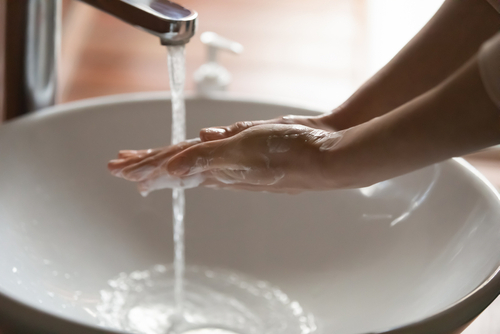 Next to heating and cooling, heating your water is the next largest use of energy in the home. It accounts for nearly 20% of your energy costs, and you may be surprised to learn that the average household uses 65 gallons of hot water a day for showers, dishwashing, laundry, and other normal chores.
If you’re relying on an old, inefficient electric water heater, you can do better by switching to a much more efficient oil-powered water heater. Heating oil uses less energy than electricity for heating water and it’s better for the environment. Electricity made at a coal-fired or natural power plant creates a lot more carbon dioxide emissions than the B20 Bioheat® fuel that we deliver.
Make the switch with an oil-fired water heater replacement and you’ll not only save money, but you’ll also reduce your carbon footprint. And by the way, an oil-fired water heater heats water much faster and for less money, compared to an electric water heater.
Be aware that the performance of any water heater diminishes over time, leading to wasted energy, higher costs than necessary, and diminished hot water production.
If your water heater is 10 years old or older, it’s probably time to make the switch to a newer unit. The average life span of a water heater varies from 7 to 13 years, depending on your town’s water quality and various other factors. Today’s oil-fired water heater technology is far superior to older models, which will guarantee you energy savings for years to come.
Indirect-fired water heaters use the burner inside your oil boiler to heat your tap water. Anytime your boiler is heating your home, your indirect water heater works free. An indirect-fired water heater is one of the most efficient water heating options available, and Westmore Fuel offers professional installation of these units from top manufacturers.
A direct-fired water heater is the kind of heater that most people know well. It’s the most common type of water heater, with a dedicated burner inside to heat water that is stored in a tank. As you use the water in the tank, the supply of hot water is constantly replenished. This is a good choice if you heat your New York or Connecticut home with a warm-air furnace, instead of a hydronic system (boiler) that uses hot water or steam to heat your home.
You can have confidence that the certified and experienced Westmore Fuel technician who arrives at your home to install your new water heater has been thoroughly trained to do the job. Plus, every water heater we install is covered by a manufacturer’s warranty, and we stand behind our installations with a 100%-satisfaction guarantee.
Whether you want to replace your old water heater now or simply want to learn more for future reference, one of our water heater equipment experts will be happy to give you advice.
Westmore Fuel installs and services water heaters in Darien, Greenwich, Stamford and nearby communities in Connecticut. We do the same for New York communities, including Port Chester, Mount Kisco, New Rochelle and White Plains.
Please contact us today to request a free estimate on a new water heater installation.
 As we say good-bye to another hot summer and welcome the cool temperatures of autumn, you need to start thinking about the condition of your heating oil system.
If you’re not sure if your oil boiler or oil furnace will make it through another winter, don’t worry, we’re here to help.
In fact, now could be the best time to make the leap to a heating system upgrade. If your furnace or boiler is more than 15 years old, you are missing out on highly efficient new technologies that can really save you a lot of money! Convenient appointments with our expert installers are easier to come by right now because of the mild weather.
Westmore has heating system options for every home and budget – including high-efficiency boiler systems and hot air furnaces that can save you 20% or more on your annual heating expenses. We also install the System 2000 from Energy Kinetics, the most efficient and versatile integrated heat and hot water system. Customers have seen annual savings of up to 40% after they upgrade to the System 2000.
As always, your heating oil system installation will be done quickly and cleanly, with minimal disruption to your home and family. Most importantly, it will be done right the first time– and always at a fair price.
Some customers who sorely need a new heating system have delayed taking action because they think they cannot afford a new boiler or furnace.
Don’t worry. Westmore Fuel now partners with the National Energy Improvement Fund (NEIF) to provide financing so our customers can take full advantage of the equipment upgrades we offer. NEIF provides loan lengths of three, five or 10 years on financing for qualifying purchases with NEIF-approved contractors like Westmore Fuel.
If you’re interested in replacing your heating equipment and would like information about equipment financing, please call us or reach out to us.
We have a dedicated staff of caring employees who are always ready to help you. They live in the communities they love to serve, and they understand the needs you have. Their knowledge and commitment help us to deliver quality and value—all backed by many decades of heating oil experience. Here are five ways we stand head and shoulders above the competition. We call it the Westmore Advantage.
Read about Bioheat fuel vs. natural gas.
 Heating oil has been keeping families warm through tough winters for almost a century. That’s a testament to its impressive ability to provide consistent, efficient heat for as long as needed. That’s a lot to feel good about it, but it gets better when you consider the safety benefits of using oil to heat your home.
Let’s start with the fuel itself. Heating oil cannot burn in its liquid state. It takes an advanced high-tech burner to ignite the oil. Before combustion can occur, heating oil must first be vaporized by your oil burner at temperatures above 140°. Heating oil also cannot explode. That’s why the fuel stored in your tank is very safe. In fact, if you drop a lit match into a bucket of heating oil, the flame would go out just as if you dropped the match into water.
Heating oil is easily transported and handled by highly trained professionals using equipment and techniques that keep safety at the forefront.
Contrast that to natural gas delivery. If an underground natural gas pipeline gets damaged, customers may lose their supply until repairs get done. And if a serious problem occurs with a gas pipeline, such as excessive pressure, explosions can occur.
Unlike natural gas or propane gas, an oil heating system poses a very low risk of carbon monoxide poisoning. If an oil burner malfunctions (most often due to a lack of maintenance), the safety devices in the unit will typically shut the furnace or boiler off.
Of course, this doesn’t mean that heating oil consumers shouldn’t have working carbon monoxide detectors inside their homes, especially near all bedrooms. Besides a malfunctioning boiler or furnace, there are many other sources of carbon monoxide leaks, including:
Make sure you check your carbon monoxide (and smoke) detectors regularly to confirm they operate properly!
You will be able to enhance heating oil safety even further by getting system maintenance done as required. This will ensure that your oil boiler or oil furnace operates with optimum safety and efficiency. Please reach out to us if you have questions about system maintenance.
A secure supply, ultra clean-burning B20 Bioheat® fuel, and a superior service department are among the attributes that make Westmore Fuel stand out. We provide B20 Bioheat fuel and service to Darien, Greenwich, Stamford, and nearby communities in Connecticut. We also deliver our B20 Bioheat® fuel and service to New York communities, including Port Chester, Mount Kisco, New Rochelle, and White Plains.
Feel free to contact us to learn more about Westmore Fuel, a company built around its customers.
 Did you know there are many ways you can save money on your energy bills by making some simple home adjustments before you leave on vacation? With the money you save, perhaps you won’t feel as guilty about splurging a little during your trip. With August one of the most popular months for Americans to travel, here are five of our favorite vacation-related energy-saving tips.
Even though you’re away, your traditional storage-tank water heater will continue heating and reheating the water in its tank —and hot water can account for nearly one-fifth of your home’s energy costs. You can reduce your expenses by putting your water heater on vacation mode. If it doesn’t have a vacation setting, set the temperature to anywhere between 50-70°F. This tip is applicable if you have a traditional gas, electric, or heating oil direct water heater. If you have an indirect-fired water heater, you’re already saving money on heating your water. Read more.
The cooling temperature of your refrigerator is also adjustable, and you don’t need to run it at full power while you’re away for a week or two on vacation. While you shouldn’t unplug your fridge, of course, your food will still be safe if you set it to 42°F You can also set your freezer to 5°F. These temperatures are cold enough to protect your food while reducing your electric bill.
It’s easy to forget about your air conditioning when you’re rushing out the door to catch a flight. Even so, you can save money by turning your thermostat up to 85°F while the house is empty. If you have a smart thermostat, you can set your home’s temperature remotely from a smartphone app.
You don’t want your empty house to be appealing to criminals. However, if you plan to leave some lights on around your home, there are ways to do so in a cost-effective way. Put some lamps on a timer and replace any old lightbulbs with energy-saving LEDs or halogen incandescent bulbs.
If you’ve never heard of an energy vampire, it’s any device that sucks electricity just by being plugged in, even when it’s not turned on. The U.S. Department of Energy estimates that energy vampires can add 10% to a home’s monthly electric bill. So, be sure to unplug these energy-sucking devices—and keep them unplugged until it’s time to use them, whenever practical.
A secure supply, ultra clean-burning B20 Bioheat® fuel, and a superior service department are among the attributes that make Westmore Fuel stand out. We provide B20 Bioheat fuel and service to Darien, Greenwich, Stamford, and nearby communities in Connecticut. We also deliver our B20 Bioheat fuel and service to New York communities, including Port Chester, Mount Kisco, New Rochelle, and White Plains.
Full online customer access, remote wireless dispatch for fuel delivery and service, a fleet of vehicles equipped with GPS, and 24-hour emergency heating service are just some of the other ways we provide customers with the Westmore Advantage.
 The evolution of our heating fuel into clean-burning B20 Bioheat® fuel, along with vast improvements in heating system efficiency, have reduced the number of gallons most homeowners burn. The result: most people really don’t need to get their systems tuned up and cleaned every year, as needed to be done in the past before the advent of Bioheat fuel. Generally, most systems only must be tuned up only every three years now.
How clean and efficient is Westmore Fuel’s B20 Bioheat® fuel? Well, when you combine our ultra-low sulfur heating oil with a 20% renewable biodiesel blend, you get a heating fuel that generates less than a tablespoon of soot per year!
Our renewable fuel dramatically reduces emissions of particulate matter, sulfur dioxide and carbon dioxide. The use of B20 Bioheat fuel eliminates thousands of metric tons of carbon dioxide each year in Connecticut and New York!
Bioheat fuel also produces fewer greenhouse gas emissions than natural gas. Methane—the main component of natural gas—has the capacity to trap so much heat in the atmosphere that, over one century, one ton of this gas causes 32 times as much warming as one ton of carbon dioxide.
The production of Bioheat fuel is extremely efficient, and the fuel itself is nontoxic, biodegradable, and promotes better air quality and environmental sustainability by reducing greenhouse gas emissions.
Bioheat fuel also reduces energy consumption by providing a cleaner, more complete and energy-efficient burn. As a result, there is less wear and tear on heating equipment.
Bioheat fuel is a blend of biodiesel and traditional petroleum-based heating oil. Biodiesel, which is made from vegetable oils, animal fats, and other renewable materials, is considered a biogenic fuel that reduces carbon output by 100%. That’s because the combustion of biofuels and other biogenic energy sources actually recycle carbon dioxide emissions through renewable plant materials and other biomass feedstocks. That’s why you’ll be hearing a lot about net-zero carbon emissions in the years ahead.
B20 Bioheat fuel also burns more efficiently, saving you money on heating costs, prolonging the life of your heating equipment and helping the environment. You don’t have to spend any money modifying your system to start using Bioheat fuel!
As a bonus, our New York customers can apply for a 20¢-per-gallon tax credit. That translates into a $200 savings for every 1,000 gallons delivered!
So, keep going green and save money on fuel, maintenance and repairs with Westmore Fuel, the leader in providing a new generation of clean-burning heating fuel for your New York or Connecticut home.
A secure supply, ultra clean-burning B20 Bioheat® fuel, and a superior service department are among the attributes that make Westmore Fuel stand out. We provide fuel and equipment service to Darien, Greenwich, Stamford, and nearby communities in Connecticut. We also deliver fuel and service to New York communities, including Port Chester, Mount Kisco, New Rochelle, and White Plains.
Full online customer access, remote wireless dispatch for fuel delivery and service, a fleet of vehicles equipped with GPS, and 24-hour emergency heating service are just some of the other ways we provide customers with the Westmore Advantage.
Feel free to contact us to learn more about Westmore Fuel, a company built around its customers.
 With energy prices unbelievably high and overall inflation rates draining cash from our pockets every day, most people are trying to save money wherever they can. Our advice is to use this time to examine ways you can cut down on air conditioning expenses right now–and then put in place a plan to conserve your heat next winter
There are actually many small yet important energy conservation methods that can add up to impressive savings. Here is a closer look at some of the steps you can take to improve your home’s energy efficiency.
During the cold months, keep curtains and shades open in sun-exposed rooms to absorb all that free heat and solar energy during the day, then close them at night to keep it in at night. Do the reverse in the summer by closing curtains and shades during the day to block solar heat. Smart window treatments can help manage solar energy throughout the year.
In the spring and summer, the U.S. Energy Department recommends setting your central air conditioning system to 78°F when you’re at home. Program your A/C system to shut off 20-30 minutes before you leave home each day; return the temperature setting to normal comfort levels 20 to 30 minutes before you come home.
In the winter, the optimal setting is 68°F when you’re at home. Dial it down toward the 60°F range when you’re asleep or out of the house. The temperatures you ultimately choose will depend on factors like the outdoor temperature and your family’s comfort preferences. Remember, these are just guidelines.
To learn about how you can make a big impact your home’s energy efficiency through upgrades to systems like heating oil boilers and heating oil furnaces, please go here.